The History of Golf in Japan
From its British beginnings in Kobe to its emergence as one of the most distinctive golfing nations, Japan today has the second-largest golfing population in the world. How has that come to be?
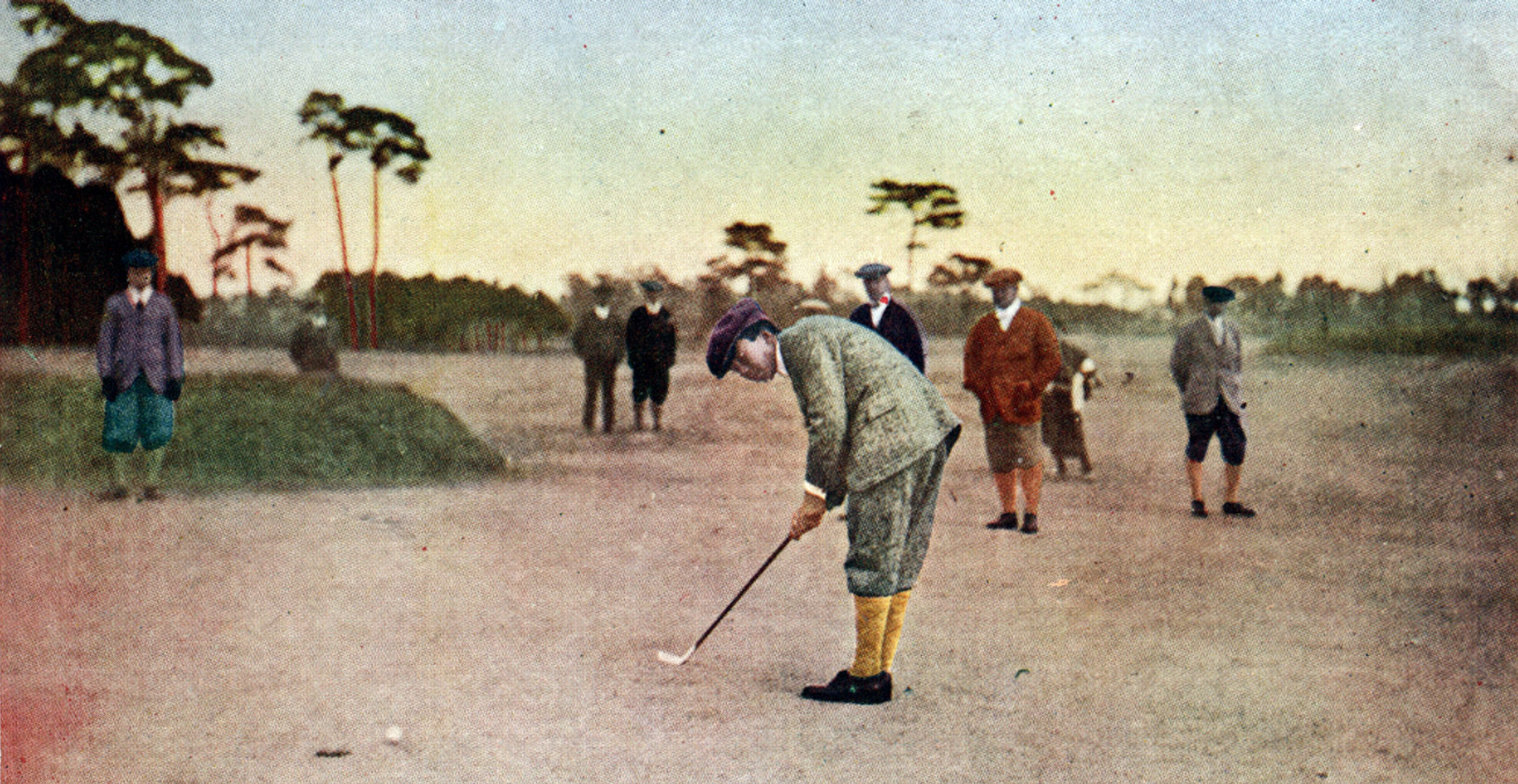
Since my first article covered the establishment of Kobe Golf Club, the first in Japan, this piece will pick up from where it was left, understanding key milestones and international influences that has shaped golf in Japan to what it has become.
The Early Days (1910s – 1930s):
Golf was mostly confined to foreign residents, particularly in port cities like Kobe, Nagasaki and Yokohama. In 1913, returning to Tokyo from a 5-year secondment in New York as the supervisor of the Bank of Japan’s overseas agencies, where he began playing golf, Junnosuke Inoue wanted to continue. When playing at Nippon Race Club Golfing Association, near Tokyo, he felt uncomfortable as it primarily served foreign residents. Thus, Inoue and two of his friends wanted to create a club for Japanese people, and so opened Tokyo Golf Club in 1914.
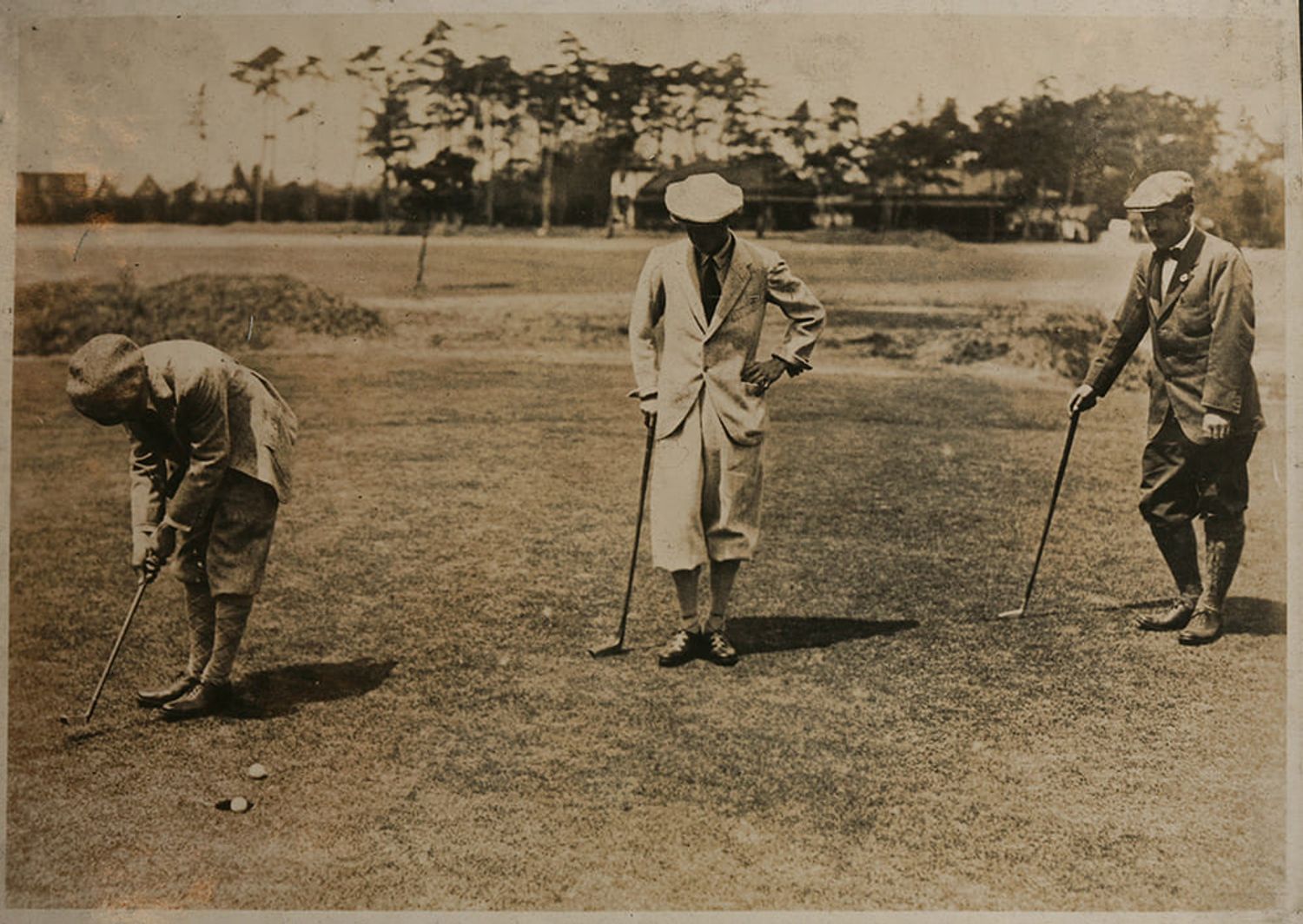
Over the next decade, golf clubs for Japanese players were popping up around the country, however there was central organisation. Golf was played following the rules written in English, which was not fully comprehended by the Japanese, and there were ample cases where fouls were committed. In 1924, representatives from seven clubs met at Tokyo GC to establish the Japan Golf Association (JGA).
Japan’s Golden Age of Architecture (1930s):
In 1930, Tokyo GC approached renowned golf architect, Harry S. Colt to come from the UK to assist the club’s relocation. Harry S. Colt felt he was too old and sent his colleague, Charles H. Alison in his place. During Charles’ three-to-four-month stay, he visited Kobe, and on the 10th of January 1931 he inspected the proposed site of Hirono Golf Club and drew up the course design. Hirono GC would come to be his architectural masterpiece in Japan. Unlike what had been built up to that time, where typically club members designed and built the holes themselves, Alison used topography and strategy to lay out his courses. Osamu Ueda, who would become a renowned Japanese golf course architect, worked on the construction of Hirono, under Alison.
Alison also left his mark on Japan for decades to follow through his bunker design. Placing large deep bunkers with steep faces, around greens and fairways, Alison’s sand traps became known as アリソンバンカー (Alison Bunker), a term still used today. They weren’t placed to simply punish poor shots; they forced golfers to consider angles of their approach, club selection, and risk versus reward.
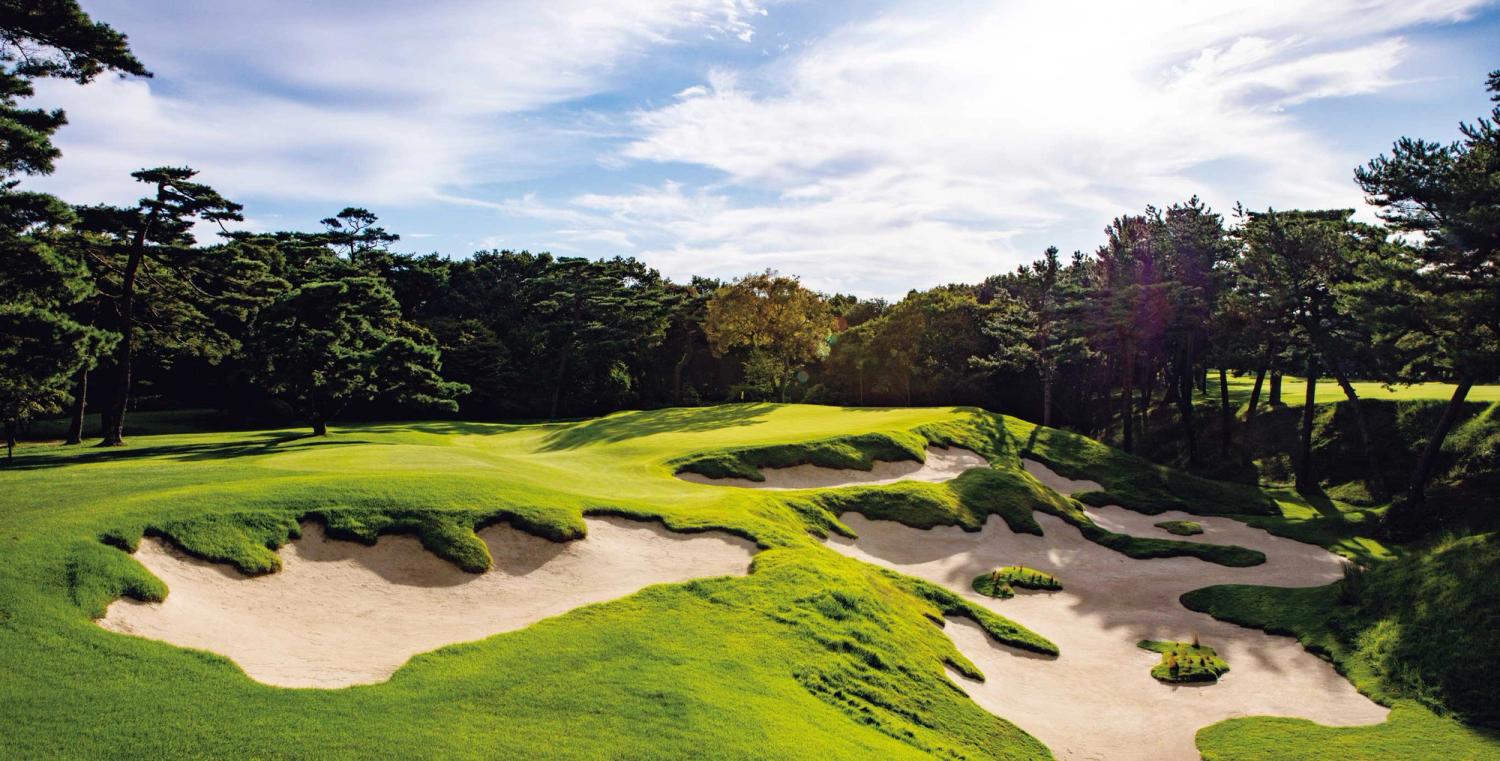
The Golden Age also gave us the development of two-green holes. Clubs tried by importing the Bentgrass to improve their courses’ quality; however, the grass struggled surviving the hot summers and the winter snow. Kasumigaseki Country Club had changed its West Course’s greens to Bentgrass, but in the summer of 1933 suffered severe heat damage. Then in 1936, the East Course's Korai-grass greens subsequently suffered severe snow damage. Thus, the club developed a two-green system for every hole, one suitable for the summer months and another for the colder weather, completing this approach across its 36 holes in 1939.
World War II:
With the outbreak of World War II, many golf courses were forcibly requisitioned as military land. In 1942, the JGA dissolved and for many courses like Fujisawa GC, a championship course which was hailed as the most beautiful in the Kanto Region, disappeared without ever being revived after the war. For the courses that survived WWII or returned from military ownership, many were subsequently controlled by occupying forces. After the war, golf’s popularity began rising once again and the JGA re-establishing as the Japanese Golf Federation (JGF) in 1949.
Canada Cup, 1957:
In October 1957, the fifth Canada Cup was the first international professional competition to be held in Japan, at the East course of Kasumigaseki Country Club. The Cup was created in 1953 by American businessman John Jay Hopkins, to promote international friendship during the Cold War. The first tournament was held at Beaconsfield Golf Club near Montreal, Canada, hence its name.
The tournament consisted of a stroke-play pairs competition with two representatives from each country, where the lowest combined scores over 72-holes would win, as well as an individual stroke-play championship. Japan’s pairing, Torakichi Nakamura and Koichi Ono, won the pairs by nine strokes, beating players such as Sam Snead, Jimmy Demaret, and Gary Player. But what further cemented Japan on the international stage, was Nakamura’s singles victory by seven strokes. Nakamura’s humble youth, coming from a farmer’s family, made his win eye-opening to the masses. Golf was starting to become not just for wealthy business folk.
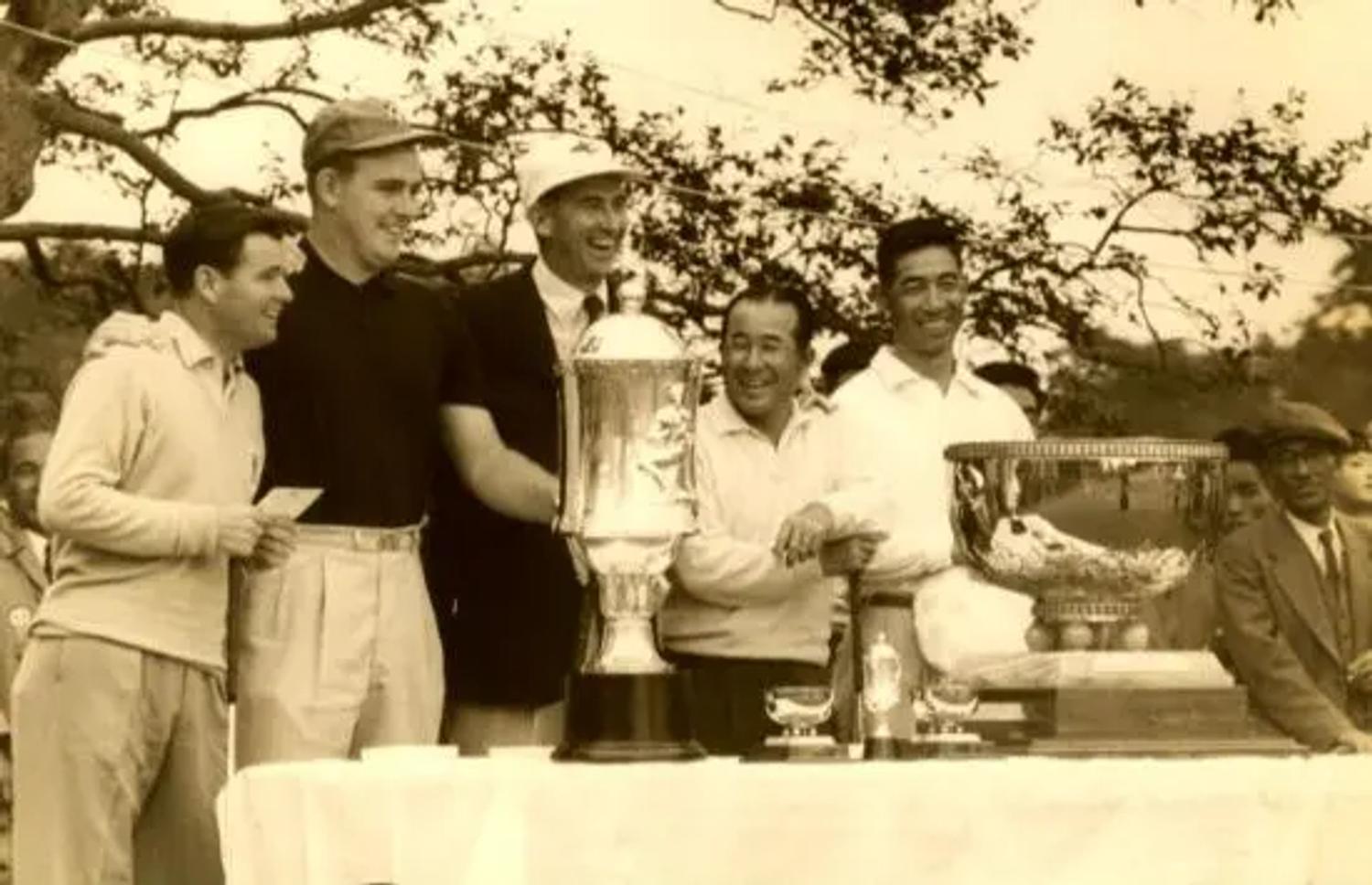
The cup was the first nationally televised golf competition and Japanese commentators have recently admitted they did not fully understand the golf lingo or what exactly was going on; however, the event propelled golf’s domestic popularity. The victory came just 12 years after the Japanese surrender in WWII, so seeing the flag raised at the Canada Cup in victory, for many, was a delightful sight indeed. At the time of victory, there was approximately 180,000 golfers in Japan. By the early 60s, this number skyrocketed to more than 600,000.
The following decades of domestic economic growth coincided with the rise of golf’s popularity in Japan. The sport was becoming an important part of corporate culture. And with golf course land development becoming increasingly lucrative, construction companies and world-renowned course architects wanted to get a piece of the pie. By 1975, there was approximately one thousand courses in Japan, compared with just over one hundred back in 1957.
Japan’s Economic Bubble (1980s-2000s):
The late 1980s economic bubble took golf from being just a sport, to an investment vehicle. The transferable (golf club) membership model became a market in itself. These type of membership generally entitled their holders to club privileges, including playing access, usually subject to annual dues and other fees. Some who never set foot on the course, held onto memberships in the hope their value would rise, which most did if they got in at the right time. Between 1980 – 1990, average membership resale prices around greater Tokyo rose from ¥5m (approx. £19k) to ¥50m (approx. £190k), respectively. A noteworthy membership fee was Tokyo’s Koganei Country Club, which peaked at ¥400m (approx. £1.5m) in 1990.
Developers used the speculative membership model, where investors would purchase membership rights to a club that had yet to be built. On the promise of exclusive, premium quality courses and repayment after 10 years, developers would pull in tens of millions of dollars to finance the construction of the clubs.
When the land and asset-price bubble started to deflate in 1990, golf clubs and membership values came with it. Club membership values relied heavily on the speculative future demand of golf, so when companies began reining in corporate expenditure, clubs started seeing a bear market and how financially exposed they had let themselves become. According to figures published by the Japan Golf Journalists Association, 931 courses had undergone legal insolvency or restructuring proceedings between 1991 and the end of 2015.
21st Century:
A huge turning point for golf in Japan came during the start of the 21st century. With many golf clubs holding enormous amounts of debt, one could assume most would become insolvent and close down. However, US financial institutions, including Goldman Sachs and Lone Star, began acquiring Japanese clubs as they saw a different opportunity. Rather than retaining the exclusive and elite outlook on these golf clubs, green fees were reduced, tee-time availability increased, non-members were allowed to play and the traditional mid-round meals became optional.
Were these US firms saviours or financial birds of prey? While they widened the accessibility of golf to the average hacker, they left existing members with huge financial losses. For example, through the debt restructure of Nitto Kogyo golf course operator, Goldman Sachs offered the approximately 70,000 members either retain playing rights, receive 2.5% of their deposit, or be allowed to sell their membership rights on the market.
Although golf participation from 2000-2024 declined by approx. 30%, Goldman Sachs and Lone Star may have prevented many clubs from closing, they increased playing opportunities and allowed golf operators to remain commercially viable through a difficult period . Corporate culture changed too, as companies increasingly scrutinised entertainment expenditure.
Recent Triumphs:
During the first decade of the 21st century, Ai Miyazato became a sensation in Japanese women’s golf when she won a professional tournament in 2003, aged eighteen. Ryo Ishikawa was only fifteen when he won the Munsingwear Open KSB Cup on the Japan Golf Tour, while still an amateur. Both young players went on to compete in international tours, showing a different image of Japanese golf: younger and internationally ambitious.
I’d be remiss not to mention the major championship wins in the last decade. In 2019, Hinako Shibuno flew to England for her first tournament outside of Japan. Going into the final round she had a two-stroke lead, however four-putted the third hole for a double bogey. With a heroic back-nine comeback, she finished in style when she sunk a 20-footer to take the 2019 Women’s British Open, becoming the first Japanese women's major winner in 42 years. Ayaka Furue, Mao Saigo and Miyu Yamashita have all won majors since 2024.
On the other side of the pond, in 2023, Hideki Matsuyama’s victory at the Masters was just as dramatic as Shibuno’s. Matsuyama was four strokes ahead going into the final round. He found himself scraping through the back nine, allowing his competitors to narrow the lead. On the 18th, he found himself in a greenside bunker which he recovered well enough to make a bogey. Matsuyama became the first Japanese male golfer to win a major, receiving the coveted Augusta Green Jacket. Both major wins proved to the world that Japanese golfers were here to compete.
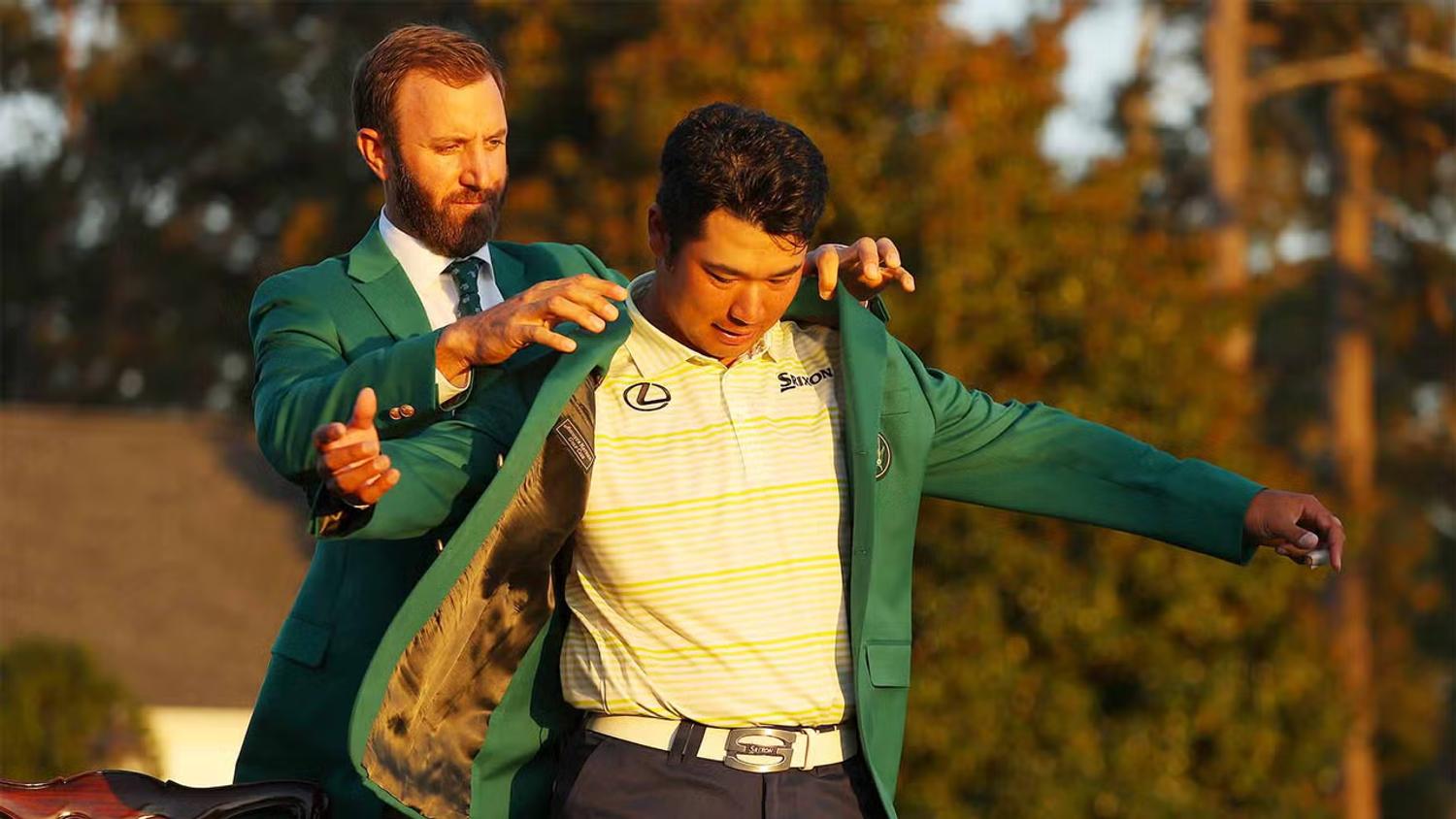
One hundred years ago, golf in Japan relied heavily on foreign residents, imported golfing traditions, and British course architects. Today, Japanese golfers are winning major championships around the world, Japanese manufacturers are internationally established, and historic courses are hosting prestigious events.
Domestic participation in the 21st century has seen an overall decline. With the ageing population too, the ‘economic-bubble’ golfers are starting to hang up their golf shoes. However, since COVID-19, Japan has experienced a gradual increase, particularly in young players and women. Japan still has around 2,200 golf courses, but will golf in Japan be able to adapt again to changing demographics and economic pressures?
Sources:
https://www.kasumigasekicc.or.jp/
https://jga-golfpedia.jp/article/65
https://www.plus-web.co.jp/news/?num=20021213110127